November 5, 2026
A practical guide to domestic mission trips for churches, youth and college groups: what the work looks like, how to prepare safely, and what NYC trips cost.

We also accept other Non-Traditional Gifts.
Click here to learn more
We also accept other Non-Traditional Gifts.
Click here to learn more
We also accept other Non-Traditional Gifts.
Click here to learn more
We also accept other Non-Traditional Gifts.
Click here to learn more
We also accept other Non-Traditional Gifts. Click here to learn more
We also accept other Non-Traditional Gifts. Click here to learn more

5 Asset Based Church Outreach Ideas for Urban Communities That Last
September 8, 2026
Avoid Double Fares: NYC Subway Tips for Riders and Mission Teams
September 15, 2026New York School of Urban Ministry
The quickest way for youth groups to run meaningful youth service projects in New York City is to pick from five proven project types, meal outreach, street ministry, tutoring, park cleanups, and library volunteering, then partner with an established local host. Going it alone means navigating permits, safety rules, and cold-calling shelters. Partnering with a trained host like NYSUM or a school-based program cuts that administrative weight dramatically and gets your group serving faster.
TL;DR:
- Partnering with established organizations like NYSUM or a school-based program significantly reduces administrative burdens and speeds up service project implementation.
- Urban service projects should be chosen based on genuine community needs, such as food insecurity or overcrowded programs, rather than convenience or familiarity.
- Structuring trips with pre-trip training, reflections, and community partnership maximizes long-term impact and personal growth for youth participants.
- Cost can be managed through existing church funds, small grants, and fundraisers, making domestic trips to NYC more accessible than international alternatives.
- Clear planning steps, including consent forms, background checks, safety protocols, and impact measurement, are essential for effective and ethical youth service trips.
Every borough offers different entry points for teen volunteers, and the right project depends on your group’s size, age range, and comfort level with public-facing work. Some activities suit a quiet, task-oriented crew. Others fit teens who like talking to strangers and thinking on their feet.
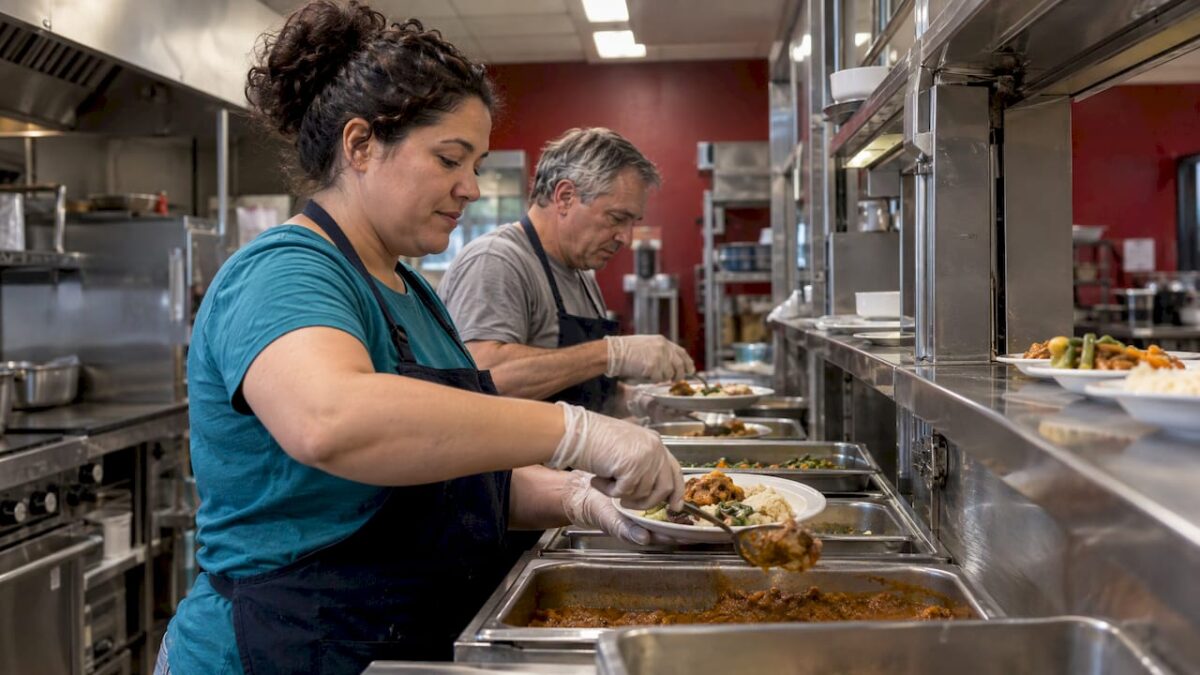
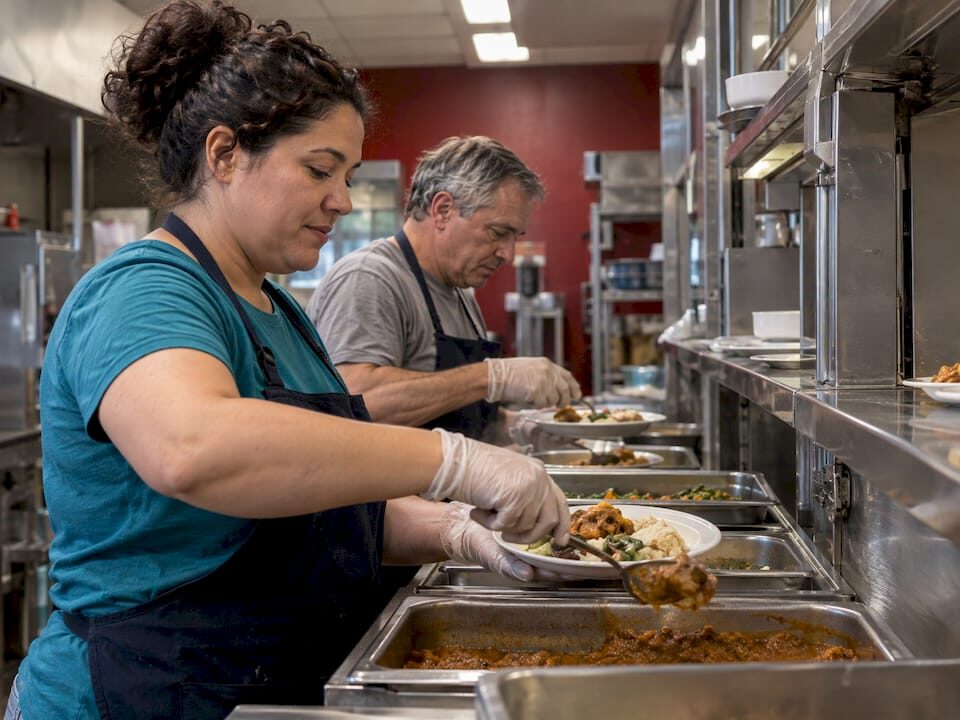
Meals and food outreach remain the most accessible starting point for most youth groups. Soup kitchens and meal-packaging events give teens structured, low-risk roles: sorting donations, assembling meal bags, serving at a line, or washing dishes. These projects work well for younger teens and first-time volunteers because supervision is built into the setting and the task list is concrete.
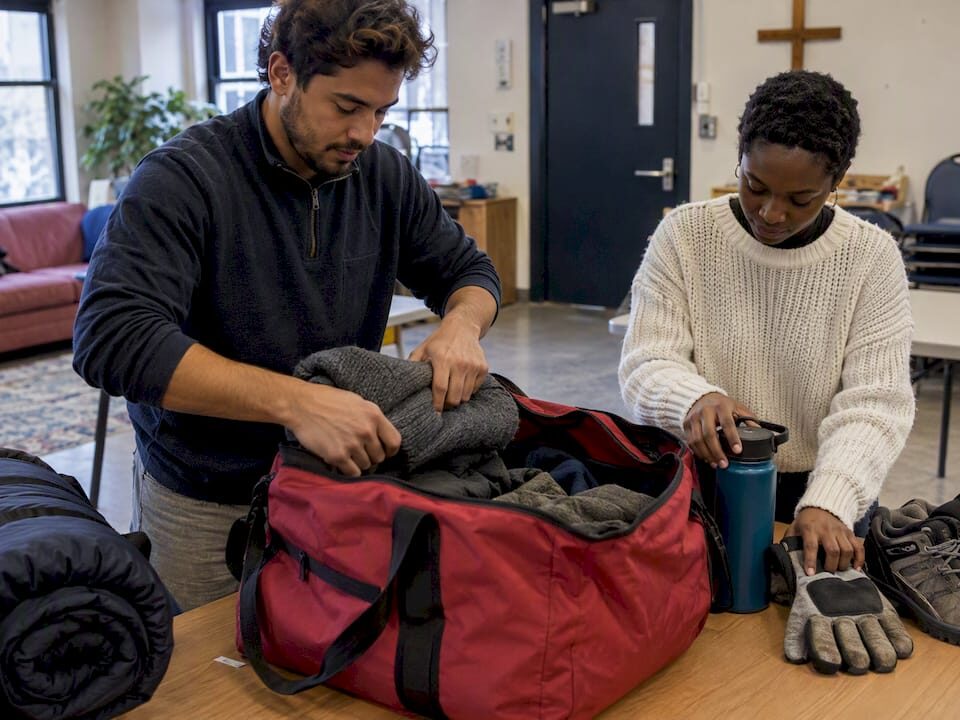
Street outreach asks more of a group but delivers a different kind of growth. Assembling care kits (socks, toiletries, snacks) ahead of time, then distributing them at hospitality tables or during prayer walks, puts teens in direct contact with people experiencing homelessness. Leaders should brief students beforehand on boundaries, what to say, what not to promise, and how to redirect a difficult conversation to an adult leader.
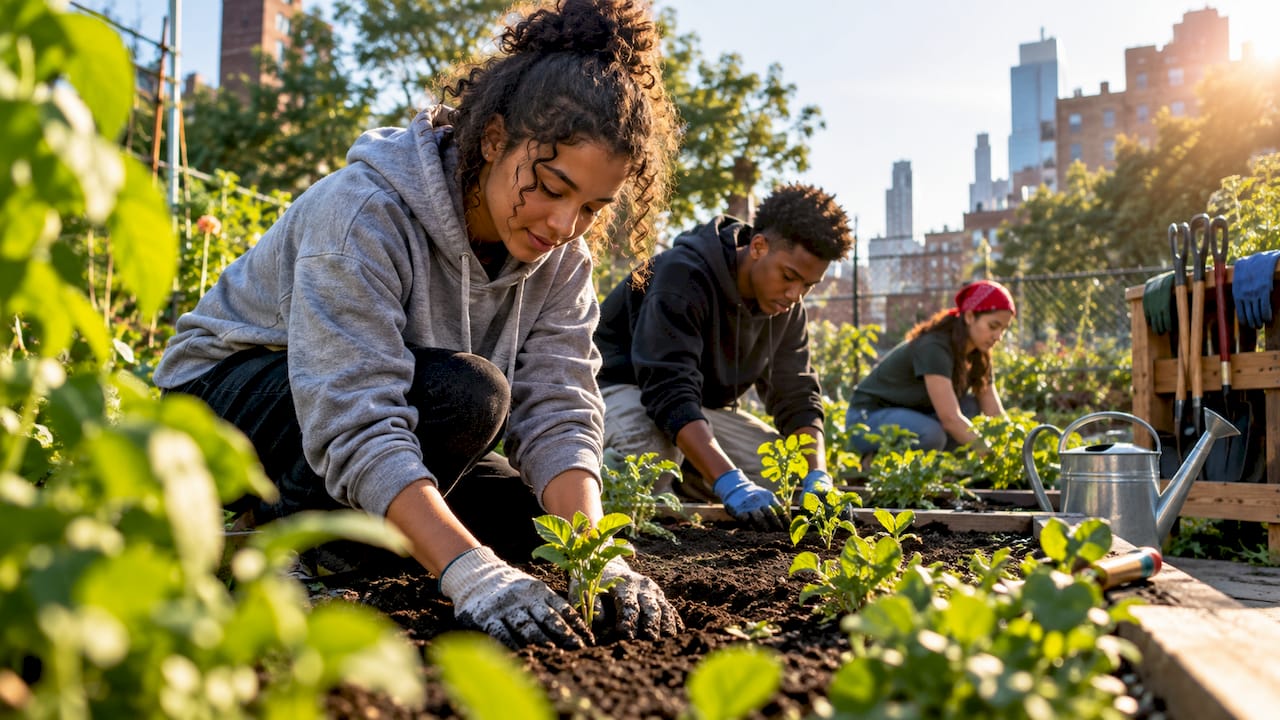
Environmental projects give restless groups something physical to do. Park cleanups, community garden days, and conservancy volunteer shifts, often run through borough-based park groups, let students see immediate, visible results from a few hours of labor.
Education-focused service works especially well for high schoolers who want ongoing, relationship-based volunteering. Tutoring, after-school mentoring, and library support programs give teens repeatable roles and let them track a student’s progress over weeks rather than a single afternoon.

One-day service summits and school-led projects round out the list. These larger, organized events pair well with the Service in Schools framework the NYC Department of Education runs, and they’re a low-commitment way to test whether your group is ready for a longer mission trip.
Local listings that track teen-friendly volunteer options across the city update seasonally, so check age requirements and time commitments before locking in a date.
Planning a service trip in reverse order, picking the activity before setting the goal, is the single most common mistake youth leaders make. Here’s a sequence that works better.
Pro Tip: Assign one adult leader specifically to logistics (forms, transport, schedule) and another to spiritual or emotional care during the trip. Splitting these roles keeps small crises from derailing the whole day.
Before any group steps off a bus or subway platform, a few non-negotiables need to be locked down.
The Boy Scouts of America’s Safe: Service Project Planning Checklist is a solid, field-tested model for this. It walks through project safety and planning steps originally built for Eagle Scout projects, but the framework transfers cleanly to any youth service outing. Pair it with your school’s own service-hour documentation template if students need credit toward graduation requirements.
Good intentions don’t automatically produce good service. Projects planned around what a visiting group wants to do, rather than what a neighborhood actually needs, tend to leave little behind once the group goes home. Avoid that trap by centering the community’s own priorities.
Youth mission organizations like LeaderTreks argue that trips built around who students are becoming, not just what they accomplish, produce the most durable change. Pro Tip: End every service day with three questions: What surprised you? What was hard? What will you do differently because of today?
International mission trips carry real value, but they also carry passport applications, visa processing, vaccination requirements, and airfare that can price out smaller groups entirely. A domestic urban trip strips away nearly all of that friction while still delivering the cross-cultural, out-of-comfort-zone experience many youth leaders are looking for.
Logistically, a trip to NYC means no international paperwork, shorter travel windows, and far more flexibility if plans change close to departure. That accessibility matters for churches and schools working with tight budgets or short planning timelines. A four-day domestic trip can happen on a school break; an international trip usually can’t.
The formative outcomes hold up too. Students still encounter poverty, cultural difference, and unfamiliar neighborhoods, just without needing a passport to get there. Ministry-focused groups have found that trips pairing hands-on service with theological reflection deepen student discipleship and perspective in ways a single service afternoon at home rarely does. For a first mission trip, or for groups rebuilding a program after a few dormant years, domestic mission trips offer a lower-risk way to test whether your students are ready for something bigger down the road.
New York City has no shortage of organizations coordinating youth volunteers, and the right fit depends heavily on your group’s size, faith orientation, and how much structure you want built in.
Faith-based mission and training organizations occupy a distinct niche: they combine service placement with spiritual formation, pre-trip training, and often lodging and meals in one package. NYSUM operates in this space, training more than 5,000 people annually and running meal outreach that serves over 16,500 meals a year across the five boroughs. Groups working through an organization like this get a built-in safety net: vetted community partners, established protocols, and staff who already know which neighborhoods need which kind of help.
Secular volunteer-matching organizations and city agencies fill a different role. They tend to focus on single-day placements, matching individual volunteers or small groups to a specific task, park cleanup, food bank shift, library help, without the training or reflection component. These work well for a group that already has clear goals and just needs a placement.
Nonprofit program consultants, like the guidance offered through Monstrous Media Group’s nonprofit resources, can also help groups think through program design and partnership ethics before committing to a specific project.
Not every neighborhood needs the same kind of service, and picking a project based on convenience rather than actual community need is how well-meaning groups end up duplicating work or, worse, doing none that matters.
Start by asking a simple question: who already works here, and what do they say they need? A church running a weekly food pantry in the Bronx can tell you far more about real gaps than a general internet search. Neighborhoods with high housing instability tend to need meal and hygiene-kit distribution. Areas with strong immigrant populations may have higher demand for tutoring and English-language support. Waterfront neighborhoods often have active park conservancy programs looking for cleanup crews.
Look for signals rather than guesses: a shelter that’s short-staffed on weekends, a school with an under-resourced after-school program, a food pantry that runs out of supplies mid-month. Established hosts who already work in these neighborhoods, whether a church partner, a school program, or a training organization like NYSUM, usually know these patterns cold and can match your group to a project that fills a real gap instead of a convenient one.
Impact measurement for a youth group doesn’t need a formal evaluation framework. It needs a few consistent numbers and a habit of asking better questions.
Track simple output metrics: meals served, hours logged, students tutored, bags of trash collected. These numbers matter less for bragging rights than for helping your group see growth over multiple trips, and they’re useful when applying for grants or reporting to a school or church board.
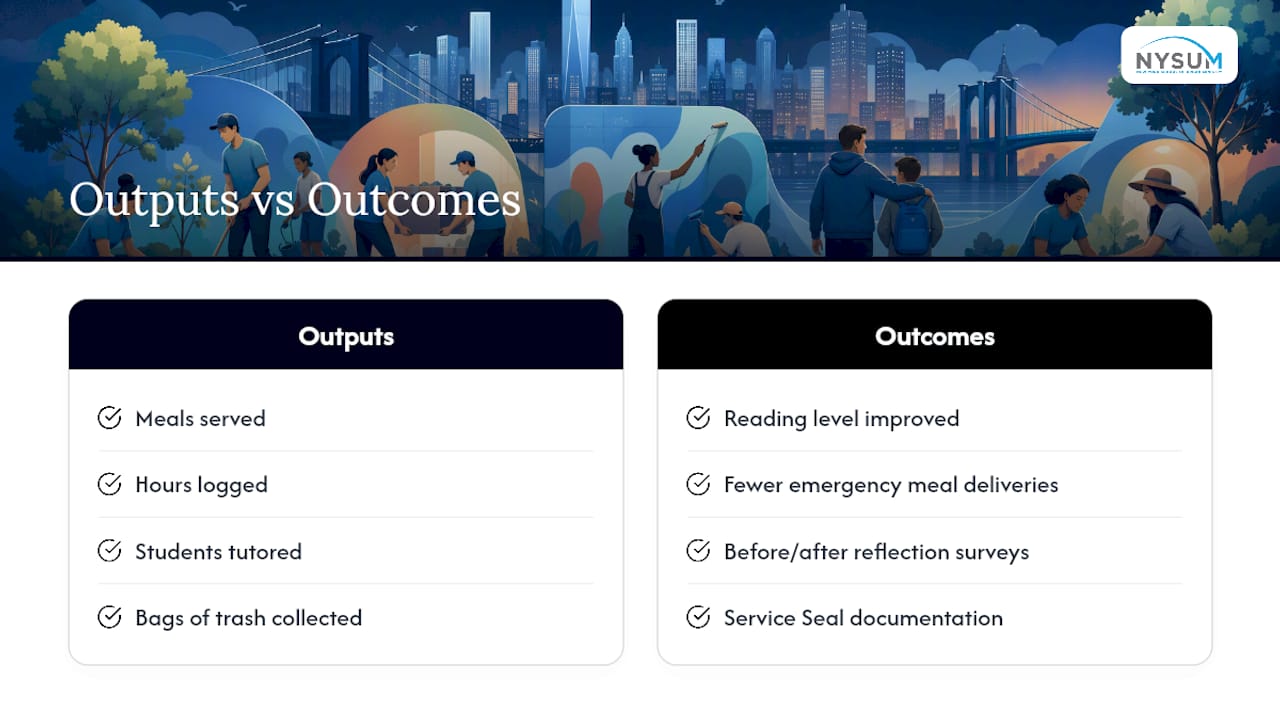
Layer in outcome measures where you can. Did a tutored student’s reading level improve over the semester? Did a shelter report needing fewer emergency meal deliveries after your group’s partnership started? These are harder to track but far more meaningful than raw volunteer-hour counts.
Finally, measure the students themselves. A short reflection survey before and after a trip, asking about empathy, comfort with unfamiliar situations, or interest in ongoing service, gives you a rough read on whether the experience is actually forming character or just filling a weekend. The NYC DOE’s Service in Schools initiative, including its Service Seal recognition for students who log substantial service hours, offers a useful model for documenting both the hours and the growth behind them.
Teens who serve without any recognition of their effort tend to treat it as a one-time event rather than a habit worth repeating. Building recognition into your program changes that.
The NYC DOE’s Service Seal gives students a formal, transcript-worthy credential for accumulated service hours, a genuine incentive for college-bound students looking to demonstrate sustained commitment. Churches and youth groups can build their own version: a simple certificate, a shoutout during a service, or a leadership track where returning volunteers get assigned more responsibility on each subsequent trip.
Leadership development works best when it’s structured, not incidental. Give returning teens a role: team captain for a meal-packaging shift, orientation leader for first-time volunteers, or small-group discussion facilitator during debrief sessions. Students who move from “participant” to “leader” over a few trips tend to stay engaged for years rather than volunteering once and drifting away. That progression, more than any single service day, is often what determines whether a youth service program has staying power inside a congregation or school.
Recruitment for youth service trips usually fails for one of two reasons: the pitch is too vague, or it starts too late. Fix both, and turnout improves fast.
Specifics recruit better than generalities. “Help pack meals for families in the Bronx” pulls more sign-ups than “come serve NYC.” Photos and stories from previous trips, with permission, are your strongest recruitment tool; teens sign up for experiences they can picture themselves having.
Start recruiting at least two months before departure if travel and lodging are involved. Parents need time to review permission forms and medical paperwork, and students weighing multiple summer commitments need a clear date on the calendar early. Use existing channels, church bulletins, school service-club meetings, youth group social media, rather than building a new promotional system from scratch.
Peer recruitment consistently outperforms adult-led pitches. A returning student describing their own experience to younger group members does more to fill a roster than any flyer or announcement from a leader. If your group has run a trip before, put a past participant in front of prospective ones before you ever open sign-ups.
I’ve watched many students move through NYSUM’s training each year, alongside outreach efforts serving meals across the boroughs. What produces lasting change isn’t the service task itself. It’s the combination of solid training beforehand, a genuine community partnership during the trip, and honest debrief afterward. A typical NYSUM youth mission day might start with a training session on urban poverty, move into an afternoon serving meals alongside a local church partner, and close with a reflection circle where students process what they saw. That structure, not the activity alone, is what turns a good day into a formative one.
— Pastor Peter M. DeArruda NYSUM President
Groups from Texas, Georgia, Ohio, and across the country have found that a well-structured trip to New York City delivers something a local service day rarely can: an immersive, faith-centered encounter with a city and its needs, guided by people who already know the terrain.
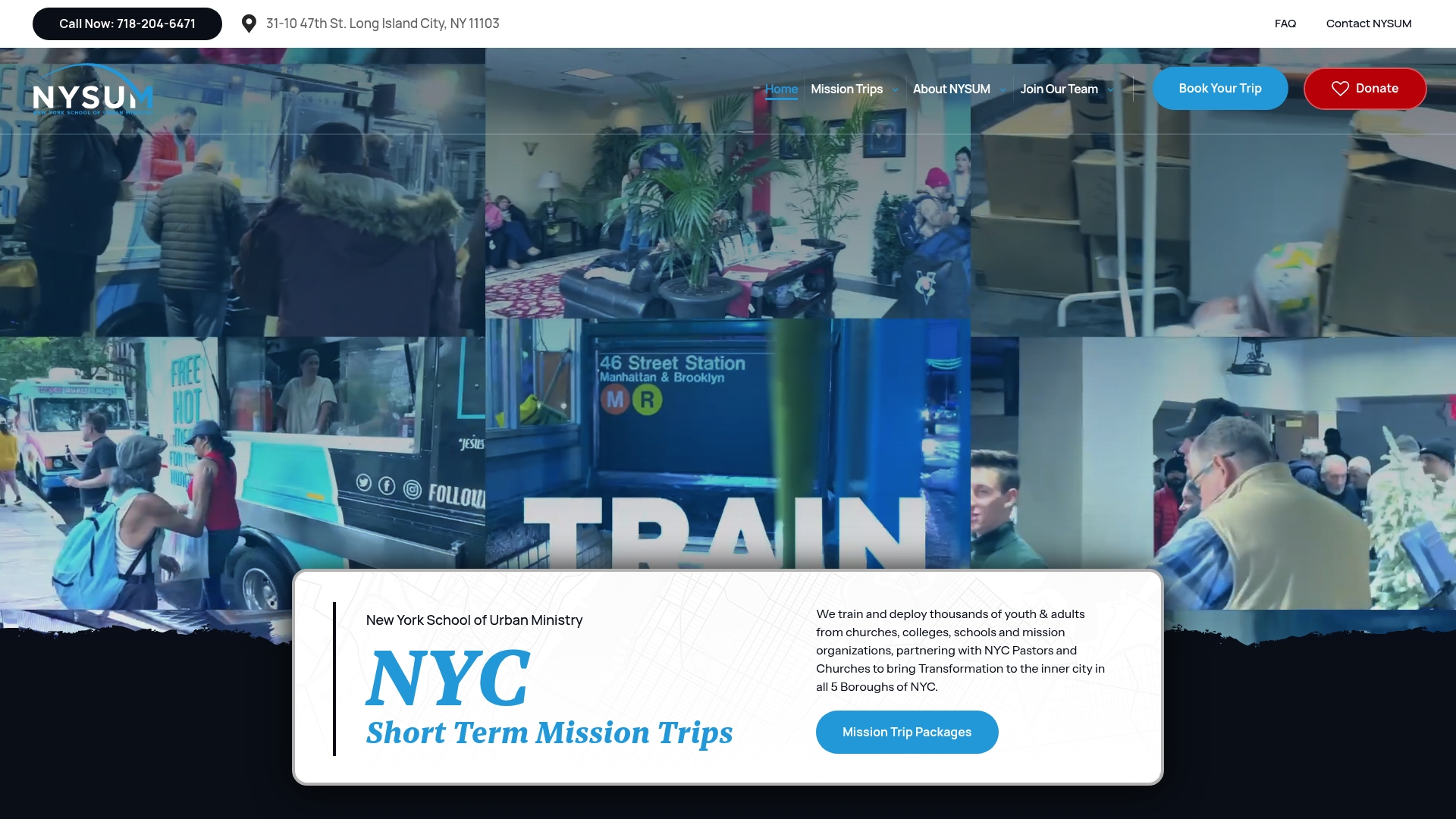
NYSUM’s ministry packages bundle what most youth leaders spend months piecing together separately: pre-trip training, hands-on outreach placements, campus lodging, and meal plans, all coordinated by a team that already partners with local churches across the five boroughs. Youth pastors, school service coordinators, and college ministry leaders from Florida, Pennsylvania, North Carolina, and other states have used this model to skip the cold-calling and permission-chasing that usually eats up planning time. If your group is ready to move past a single service afternoon and into a full mission experience, start by reviewing NYSUM’s ministry training programs and reach out to plan dates for your group’s trip.
Cost is the most common reason a youth service project never gets off the ground, but there are more funding paths than most leaders realize.
Church budgets remain the most direct route for faith-based groups: many congregations already set aside missions or outreach funds annually, and a domestic urban trip is typically far cheaper to request funding for than an international one. Youth group fundraisers, car washes, bake sales, sponsorship letters to congregation members, still work and give students ownership over the trip’s cost.
Schools running service-learning programs sometimes have small grant funds tied to their Service in Schools participation, particularly for projects that document measurable community impact. Local foundations and community boards in target neighborhoods occasionally fund youth-led service initiatives directly, especially ones addressing food insecurity or education gaps.
Denominational mission boards and regional church networks often have small grant programs specifically for youth mission trips, worth checking before assuming your congregation has to cover the full cost alone. And for groups working with an established training organization, some costs bundle into a single package price covering training, lodging, and meals, which simplifies budgeting considerably compared to piecing together transportation, food, and lodging separately.
Most food outreach and park cleanup projects welcome middle schoolers with adult supervision, while street outreach and overnight mission trips typically require students to meet a minimum age that varies depending on the host organization’s policy.
Yes. Any project involving minors should include a signed parental consent form and emergency contact information, even for a single afternoon of local volunteering.
Many can, particularly projects coordinated through or reported to a school’s Service in Schools program, which also offers the Service Seal for students with substantial documented hours.
Review NYSUM’s mission trip planning page to see package options for training, lodging, and meals, then reach out to begin coordinating dates for your group.
A one-day project is a single service activity, like a park cleanup or meal-packing shift, while a full mission trip adds pre-trip training, multiple service days, lodging, and structured reflection for deeper formation.
Tel: 718.204.6471 | Email: info@nysum.org
This website uses cookies
We use cookies to personalise content and ads, to provide social media features and to analyse our traffic. We also share information about your use of our site with our social media, advertising and analytics partners who may combine it with other information that you’ve provided to them or that they’ve collected from your use of their services.
Cookies are small text files that can be used by websites to make a user's experience more efficient.
The law states that we can store cookies on your device if they are strictly necessary for the operation of this site. For all other types of cookies we need your permission. This means that cookies which are categorized as necessary, are processed based on GDPR Art. 6 (1) (f). All other cookies, meaning those from the categories preferences and marketing, are processed based on GDPR Art. 6 (1) (a) GDPR.
This site uses different types of cookies. Some cookies are placed by third party services that appear on our pages.
You can at any time change or withdraw your consent from the Cookie Declaration on our website.
Learn more about who we are, how you can contact us and how we process personal data in our Privacy Policy.
Please state your consent ID and date when you contact us regarding your consent.