November 5, 2026
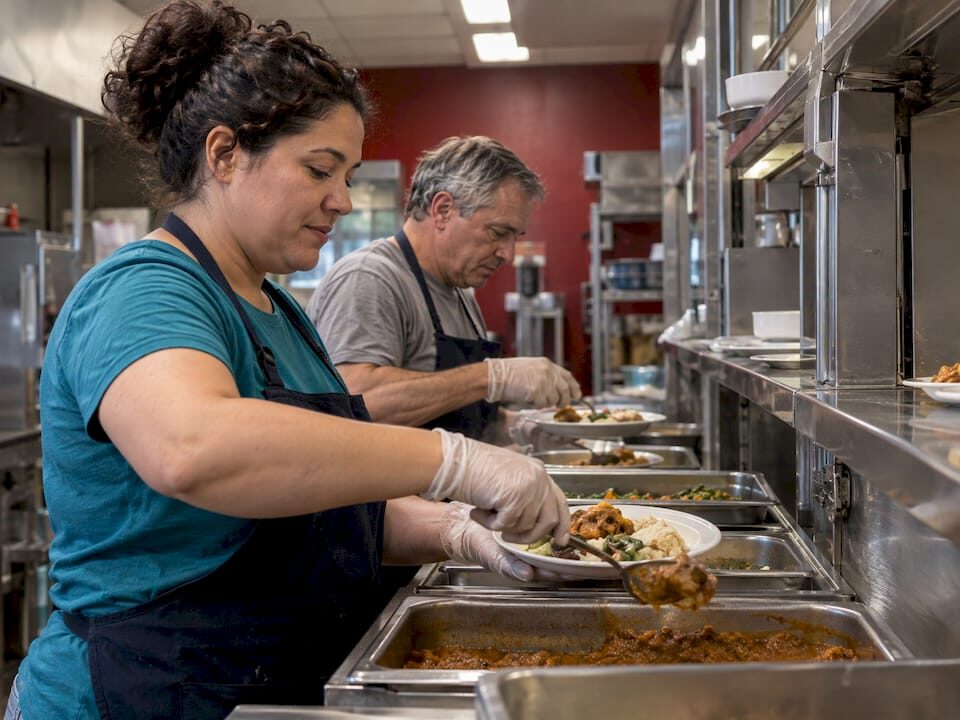
A practical guide to domestic mission trips for churches, youth and college groups: what the work looks like, how to prepare safely, and what NYC trips cost.

We also accept other Non-Traditional Gifts.
Click here to learn more
We also accept other Non-Traditional Gifts.
Click here to learn more
We also accept other Non-Traditional Gifts.
Click here to learn more
We also accept other Non-Traditional Gifts.
Click here to learn more
We also accept other Non-Traditional Gifts. Click here to learn more
We also accept other Non-Traditional Gifts. Click here to learn more

Mission Trips for Churches: Practical, Partner-First Options
August 10, 2026
Prayer Walk Guide for Leaders and Small Groups
August 18, 2026New York School of Urban Ministry

Evangelism is the proclamation of the gospel — Christ’s death, burial, and resurrection for the forgiveness of sins — with the aim of persuading hearers to repentance and faith. According to 9Marks, this definition matters because it distinguishes genuine evangelism from acts of kindness, personal testimony, or social ministry when gospel content is absent. The Great Commission in Matthew 28:18–20 gives every believer both the authority and the mandate to carry this message, and Romans 10:14–17 makes the urgency plain: faith comes by hearing, and hearing by the word of Christ. The Holy Spirit is the active agent in conversion; our role is faithful proclamation and prayer.
Evangelism is the verbal proclamation of the gospel, grounded in Christ’s authority and the Spirit’s power, and it is the responsibility of every believer, not only those with a specific gift.
| Point | Details | ||||
|---|---|---|---|---|---|
| Biblical definition | Evangelism is proclaiming Christ’s death, burial, and resurrection with the aim of persuading hearers to repentance and faith. | ||||
| All believers are called | Acts 8:4 shows ordinary church members, not apostles, spreading the word; the gift of evangelism equips the whole church, not a few specialists. | ||||
| Method adapts, message does not | Scripture shows large-audience preaching, one-on-one conversation, and cross-cultural engagement; the gospel content stays constant across all of them. | ||||
| Spirit’s role is primary | The Holy Spirit convicts and converts; the believer’s role is faithful, prayerful proclamation, not coercive persuasion. | ||||
| Nysum provides supervised practice | Nysum’s urban mission training in New York City equips church teams, youth groups, and campus ministries with hands-on evangelism experience and a repeatable framework. |
The word comes directly from the Greek euangelion, meaning “good news” or “glad tidings.” The related verb euangelizō means “to proclaim good news,” and kērussō means “to herald” or “to announce publicly.” Together, these terms describe a specific communicative act, not merely a lifestyle or a disposition.
Key Greek terms and their New Testament usage:
The ESV Global Study Bible draws a helpful line between evangelism and mission: evangelism denotes verbal proclamation of the good news, while mission may include broader service and social action. Both matter, but they are not interchangeable. Conflating them leads to the common error of assuming that serving a meal or building a relationship is itself evangelism. Those activities create receptivity; the gospel spoken aloud is what God uses to bring people to faith.
Scripture does not leave the basis for Christian outreach to inference. The New Testament grounds it in Christ’s authority, the Spirit’s power, and the church’s responsibility, as Crossway documents across multiple key passages.
| Passage | Primary Teaching | Practical Implication |
|---|---|---|
| Matthew 28:18–20 | Christ’s universal authority grounds the command to make disciples of all nations | Every believer participates in disciple-making, not only ordained ministers |
| Acts 2 (Pentecost) | Peter preaches publicly; many respond | Large-audience proclamation is a legitimate and powerful method |
| Acts 8 (Philip & the Ethiopian) | Philip explains Isaiah one-on-one in a moving chariot | Personal, Scripture-centered conversation is equally valid |
| Acts 17 (Paul in Athens) | Paul engages Greek philosophy and culture to introduce Christ | Contextualization adapts the presentation without altering the message |
| Romans 10:14–17 | Faith comes by hearing; someone must be sent and must speak | Verbal proclamation is not optional — it is the ordinary means of saving faith |
| 1 Peter 3:15 | Be ready to give a reason for the hope within you, with gentleness and respect | Every believer needs a prepared, winsome answer for their faith |
Two Acts examples show how method can vary while message stays constant. At Pentecost, Peter preaches to thousands in the open air, quoting Joel and the Psalms, and calls the crowd to repentance. The setting is public, the audience is Jewish, and the approach is direct scriptural proclamation. Philip’s encounter with the Ethiopian eunuch is the opposite in almost every way: one person, a private carriage, a question about a specific text. Philip does not open with a sermon; he asks, “Do you understand what you are reading?” and works from the man’s own curiosity. Both conversations end in the same place: a clear presentation of Christ and an invitation to respond.
The theological thread running through all these passages is consistent. Christ holds all authority (Matthew 28:18), so the commission is not optional. The Spirit convicts and converts (John 16:8), so the evangelist is not responsible for the outcome. And The Gospel Coalition rightly frames this as both urgent and liberating: we are called to faithful proclamation and prayer, not coercive persuasion.
The reasons are both theological and deeply practical, and they reinforce each other.
Theological reasons:
Practical reasons:
Mark Dever’s The Gospel and Personal Evangelism captures the pastoral dimension well: evangelism is both a privilege and a high-priority responsibility for every believer, not a program reserved for the spiritually elite. When a church treats outreach as a department rather than a culture, most members never experience the joy of seeing someone come to faith through their witness.
There is no single prescribed method in Scripture. What you find instead is a consistent message delivered through a wide range of approaches, each suited to a different context.
| Evaluation Criteria | Personal Witness | Relational / Lifestyle | Mass / Public Proclamation | Digital / Online | Short-Term Mission / Cross-Cultural | Mercy-Integrated |
|---|---|---|---|---|---|---|
| Typical audience | One person or small group | Friends, neighbors, coworkers | Large public gatherings | Broad or niche online communities | Unreached or underserved communities abroad or in urban centers | Vulnerable populations (homeless, food-insecure) |
| Primary aim | Direct gospel conversation | Building trust before and during proclamation | Wide proclamation and invitation | Scalable gospel content and conversation | Cross-cultural church planting and witness | Combining compassion with verbal proclamation |
| Necessary preparation | Gospel clarity, listening skills | Consistent Christian character, patience | Preaching preparation, logistics | Content creation, digital literacy | Cultural research, language basics, team training | Mercy ministry skills plus gospel readiness |
| Ethical concerns | Respecting autonomy, avoiding pressure | Avoiding indefinite delay of verbal witness | Crowd dynamics, emotional manipulation | Privacy, online tone, avoiding harassment | Power dynamics, dependency, cultural imposition | Ensuring aid is not conditional on religious participation |
When to use each in common ministry settings:
Campus ministry pairs well with relational and personal approaches. Students are open to conversation, and a well-timed question after a shared meal can open a gospel discussion naturally.
Neighborhood outreach often benefits from mercy-integrated methods first. A block party, a food pantry, or a basketball outreach event builds genuine community trust, and verbal proclamation follows more naturally when people know you care about them.

Online conversations call for patience and clarity. Written words lack tone, so gentleness must be deliberate. Short, clear gospel explanations tend to outperform long theological arguments in digital spaces.
Cross-cultural teams need the most preparation. Understanding local worldview, history, and communication norms is not optional; it is the difference between a message that lands and one that offends unnecessarily.
Every believer. That answer is not a motivational slogan; it is the consistent witness of the New Testament.
Acts 8:1–4 records that after the persecution in Jerusalem, the scattered believers “went about preaching the word.” These were not apostles or ordained ministers; they were ordinary church members fleeing for their lives. Their default response to displacement was proclamation.
Ephesians 4:11 does name “evangelists” as a specific gifting within the body, alongside apostles, prophets, pastors, and teachers. That gift exists to equip the whole church for ministry, not to concentrate the work in a few specialists. The person with the gift of evangelism may lead the way, but the responsibility belongs to everyone.
Practical implications for those who do not feel they have that specific gift:
E360M’s research on evangelism misconceptions identifies a telling pattern: recognizing personal inadequacy is often the first step toward effective, Spirit-led witness. The believer who says “I’m not good at this” is closer to the right posture than the one who thinks technique alone will carry the conversation.
Preparation matters more than performance. Training that centers prayer and Scripture produces longer-term confidence in ordinary believers more reliably than script drills alone. Start there.
A simple gospel outline: God → Problem → Christ → Response
Step-by-step flow:
Short scripts for different contexts:
15–30 second version (coffee or casual): “I’ve been thinking about something lately. I believe Jesus actually rose from the dead, and that changes everything about how I live. I’d love to tell you more sometime if you’re curious.”
60–90 second version (intentional conversation): “Can I share something that matters a lot to me? I believe every person was made by God and for God, but we’ve all turned away from him. The result is a broken relationship with God that we can’t fix ourselves. Jesus came, lived perfectly, died in our place, and rose again. That means forgiveness and a restored relationship with God are available to anyone who turns to him and trusts him. That’s what I’ve done, and it’s the most significant decision I’ve ever made.”
Pro Tip: The goal is not a flawless performance. The Holy Spirit is the one who convicts and converts (John 16:8). Your job is to be clear, honest, and prayerful. If you stumble over words, that is fine. A sincere, imperfect witness almost always lands better than a polished script delivered without genuine care.
Contextualization is the practice of shaping how you present the gospel without altering what the gospel is. The message stays constant; the illustrations, entry points, and communication style adapt.
Jesus modeled this with striking consistency. His conversation with Nicodemus in John 3 is theological and direct, meeting a religious scholar on his own intellectual ground. His conversation with the Samaritan woman in John 4 is relational and personal, beginning with a simple request for water and moving through her life circumstances to the living water only Christ can give. Same Jesus, same gospel, entirely different approach. Neither conversation is more “authentic” than the other; both are perfectly suited to the person in front of him.
For cross-cultural teams, a few principles hold across contexts. Preserve the gospel’s core: the death, burial, and resurrection of Christ for sin. Adapt language and illustrations to what resonates locally. A farming metaphor lands differently in rural Iowa than in midtown Manhattan. Respect local customs around hospitality, directness, and authority; what reads as confident proclamation in one culture may read as rudeness in another.
Online conversations add a layer of complexity. Written words strip away tone, and the anonymity of digital spaces can make people either more defensive or more open than they would be face-to-face. Short, clear, non-combative messages tend to open more doors than long theological rebuttals. Ask questions. Show genuine interest. The role of prayer in these interactions is no less important because the medium is digital.
Several persistent myths make evangelism harder than it needs to be, and a few genuine ethical concerns deserve honest attention.
Common misconceptions:
Ethical guidelines every believer should hold:
Pro Tip: The word-and-deed balance is not a competition. Mercy ministry cultivates receptivity; verbal proclamation carries the saving message. Combining both produces greater fruit than either alone. The practical test: are you serving people in a way that creates natural openings for the gospel, or are you using service as a permanent substitute for speaking?
There are also moments when an organization should pause or adjust outreach. In the immediate aftermath of a disaster, leading with proclamation before meeting physical needs can communicate that you value conversion more than the person. Read the context, meet the need, and trust that the gospel will have its moment.
Culture is what happens when no one is watching. A church with a genuine evangelism culture does not need a special event to prompt outreach; members share their faith because it is normal, expected, and celebrated.
Several elements build that culture over time. Regular corporate prayer for specific lost people by name is perhaps the most underrated practice. When a congregation prays together for neighbors, coworkers, and family members who do not yet know Christ, those people become real to the whole church, not just to the individual who knows them. Testimony-sharing in worship, where members briefly describe a gospel conversation or a new believer’s story, normalizes outreach and encourages others.
Training workshops do not need to be elaborate. A single evening covering the gospel outline, a few conversation starters, and time to practice in pairs can equip a room full of people who previously felt unqualified. Mark Dever’s The Gospel and Personal Evangelism works well as a short-course text for exactly this kind of training, precisely because it frames evangelism as a church-wide habit rather than a specialist skill.
Follow-up is where many churches lose momentum. A simple pathway matters: when someone expresses interest or makes a profession of faith, what happens next? A practical follow-up checklist for teams:
The goal is not a program; it is a person being incorporated into the body of Christ and growing in faith.
NYSUM (the New York School of Urban Ministry) offers one of the most concrete examples of how evangelism training translates into real-world practice. Operating across New York City’s five boroughs, NYSUM trains and deploys church groups, youth organizations, and college ministry teams in short-term urban mission experiences that put the principles in this article into supervised practice.
A representative short-term trip includes:
NYSUM impacts many trainees annually and serves numerous meals through its outreach initiatives. For a church group or youth team that wants to move from theory to practice, that kind of supervised, structured environment is genuinely rare. Participants leave not just having served, but knowing how to participate in church missions with greater confidence and skill back home.
Take one step this week. That is the encouragement here, and it is worth stating plainly before anything else: you do not need to complete a training course, memorize a script, or wait for the perfect moment. You need to pray, prepare one honest sentence about what Christ means to you, and be willing to say it.
The Holy Spirit does not wait for polished presentations. He works through ordinary believers who are willing to speak. Pray for one person by name today. Practice your 60-second gospel with a trusted friend this week. Then schedule one real conversation, even if it feels awkward. The discomfort of early attempts fades; the habit of faithful witness grows.
Church teams, campus groups, and youth leaders who want to move from reading about evangelism to actually doing it have a concrete option in NYSUM’s ministry packages and training campus in New York City.
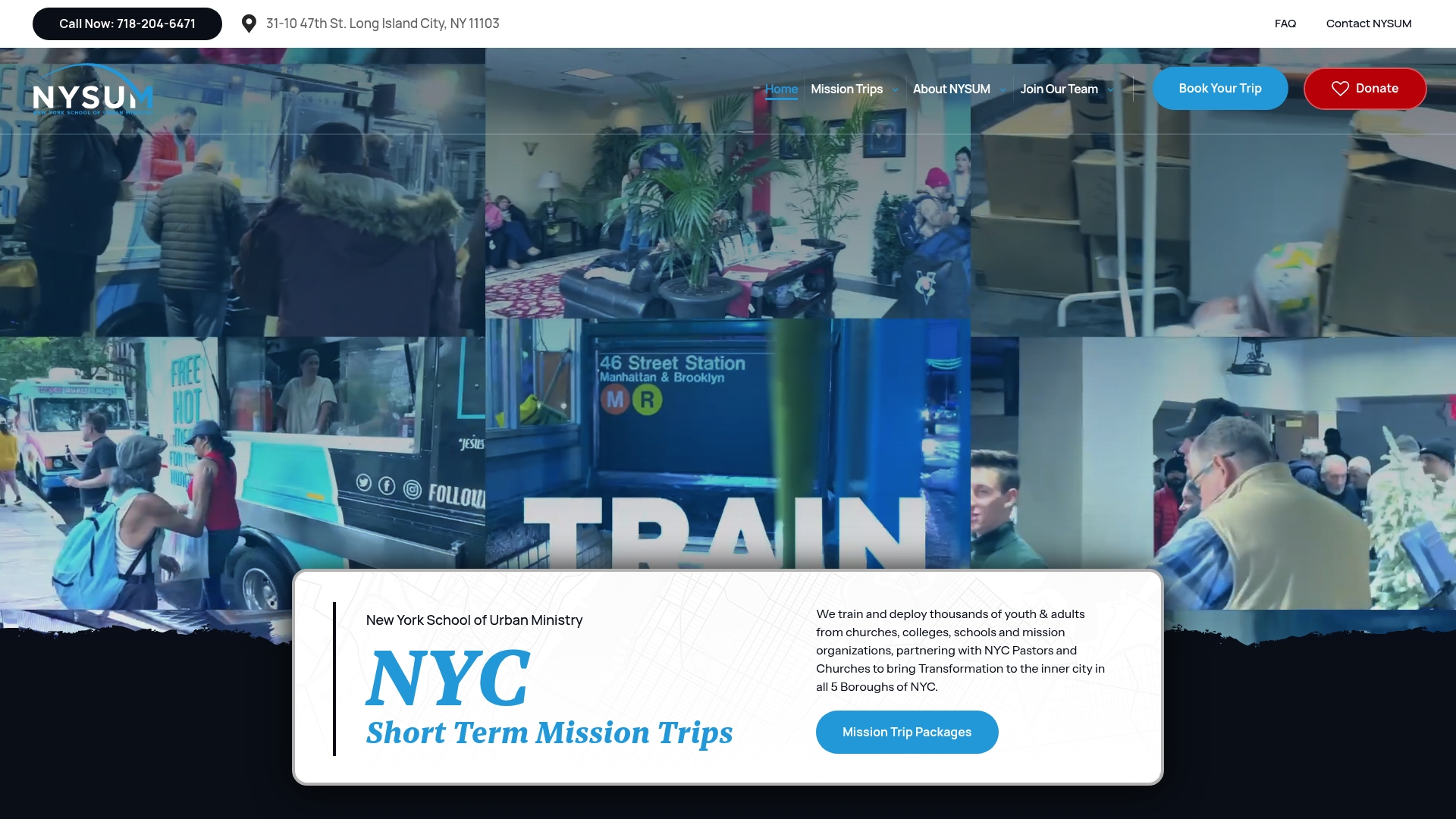
NYSUM’s short-term urban mission trips are structured around exactly the skills this article covers: gospel clarity, relational outreach, prayer dependence, mercy-integrated ministry, and real follow-up. Teams arrive with varying levels of experience and leave with a repeatable framework they can bring back to their home church. The training is hands-on, the supervision is experienced, and the urban context of New York City provides a cross-cultural, high-need environment that sharpens every participant’s witness. Whether your group is booking a 5-day trip or exploring longer immersive options, NYSUM’s team can help you find the right fit. Reach out through the ministry packages page to check availability and take the next step.
A short list of high-quality resources for going deeper on the theology and practice of evangelism:
Evangelism is the proclamation of the gospel, specifically Christ’s death, burial, and resurrection for the forgiveness of sins, with the aim of persuading hearers to repentance and faith. It is distinct from acts of service or personal testimony when those activities do not include the gospel’s content.
Evangelicalism is a movement within Protestant Christianity that emphasizes the authority of Scripture, the necessity of personal conversion, the centrality of Christ’s atoning work, and the responsibility to share the gospel. All evangelicals are Christians, but not all Christians identify with the evangelical tradition.
Three widely recognized approaches are personal witness (one-on-one gospel conversation), relational or lifestyle evangelism (sharing faith within existing relationships over time), and mass or public proclamation (preaching to large audiences). Scripture shows all three in the New Testament, and most effective outreach combines elements of more than one.
Jesus gives the clearest commission in Matthew 28:18–20, commanding his followers to make disciples of all nations, baptizing and teaching them. He also models adaptive, personal evangelism in his conversations with Nicodemus (John 3) and the Samaritan woman (John 4), showing that the message stays constant while the approach fits the person.
Tel: 718.204.6471 | Email: info@nysum.org
This website uses cookies
We use cookies to personalise content and ads, to provide social media features and to analyse our traffic. We also share information about your use of our site with our social media, advertising and analytics partners who may combine it with other information that you’ve provided to them or that they’ve collected from your use of their services.
Cookies are small text files that can be used by websites to make a user's experience more efficient.
The law states that we can store cookies on your device if they are strictly necessary for the operation of this site. For all other types of cookies we need your permission. This means that cookies which are categorized as necessary, are processed based on GDPR Art. 6 (1) (f). All other cookies, meaning those from the categories preferences and marketing, are processed based on GDPR Art. 6 (1) (a) GDPR.
This site uses different types of cookies. Some cookies are placed by third party services that appear on our pages.
You can at any time change or withdraw your consent from the Cookie Declaration on our website.
Learn more about who we are, how you can contact us and how we process personal data in our Privacy Policy.
Please state your consent ID and date when you contact us regarding your consent.