November 5, 2026
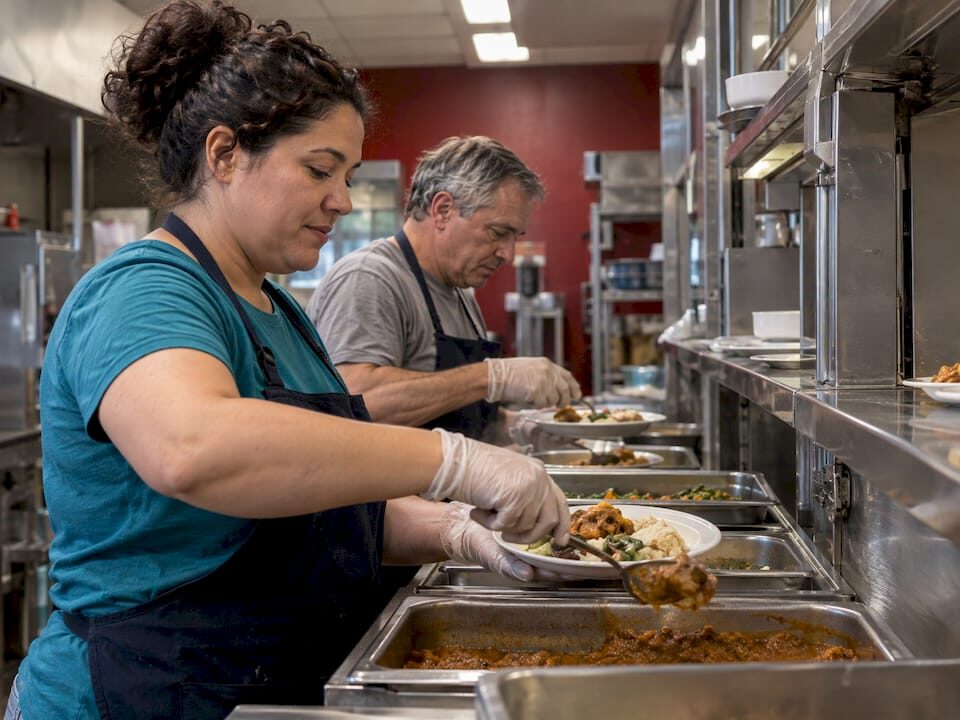
A practical guide to domestic mission trips for churches, youth and college groups: what the work looks like, how to prepare safely, and what NYC trips cost.

We also accept other Non-Traditional Gifts.
Click here to learn more
We also accept other Non-Traditional Gifts.
Click here to learn more
We also accept other Non-Traditional Gifts.
Click here to learn more
We also accept other Non-Traditional Gifts.
Click here to learn more
We also accept other Non-Traditional Gifts. Click here to learn more
We also accept other Non-Traditional Gifts. Click here to learn more

Book NYSUM’s Thanksgiving Outreach Package in NYC
August 20, 2026
What Christian Missions Are and How to Serve Well
August 27, 2026New York School of Urban Ministry
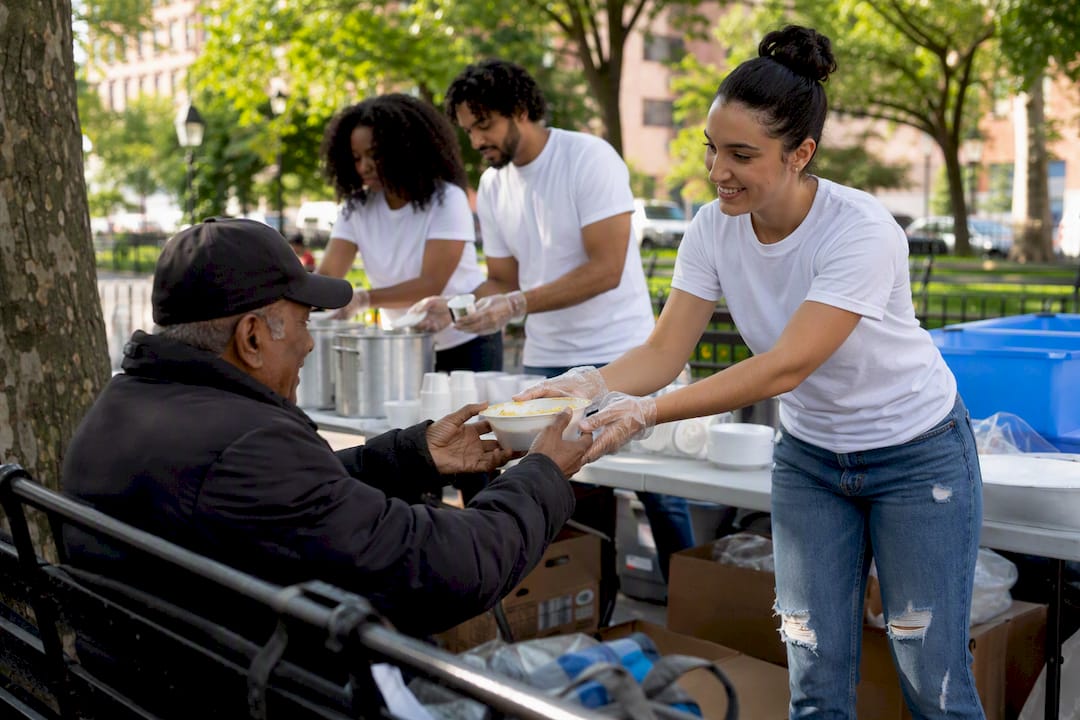
Christian outreach is organized service by believers or a church that meets real, practical needs, from food and clothing to job support, while opening a door for the gospel to be shared. It is not the same as evangelism, which is the spoken proclamation of Christ and a call to respond, but the two work together constantly. If you want to serve today, you have three fast paths in:
Christian outreach works when compassionate service and gospel proclamation operate together, backed by documented logistics, measurable outcomes, and genuine local partnerships.
| Point | Details |
|---|---|
| Outreach and evangelism differ | Outreach meets material needs; evangelism verbally proclaims Christ and calls for a response. |
| Scripture grounds the practice | Matthew 28:19–20 and Mark 16:15 form the core mandate behind most outreach programs. |
| Build sequences, not one-offs | Repeatable programs with follow-up steps create lasting relationships better than single events. |
| Measure simply | Track people served, repeat engagement, and volunteer retention using sign-in sheets and short surveys. |
| Partner locally, train formally | NYSUM trains over 5,000 people annually and pairs visiting teams with local churches across New York City. |
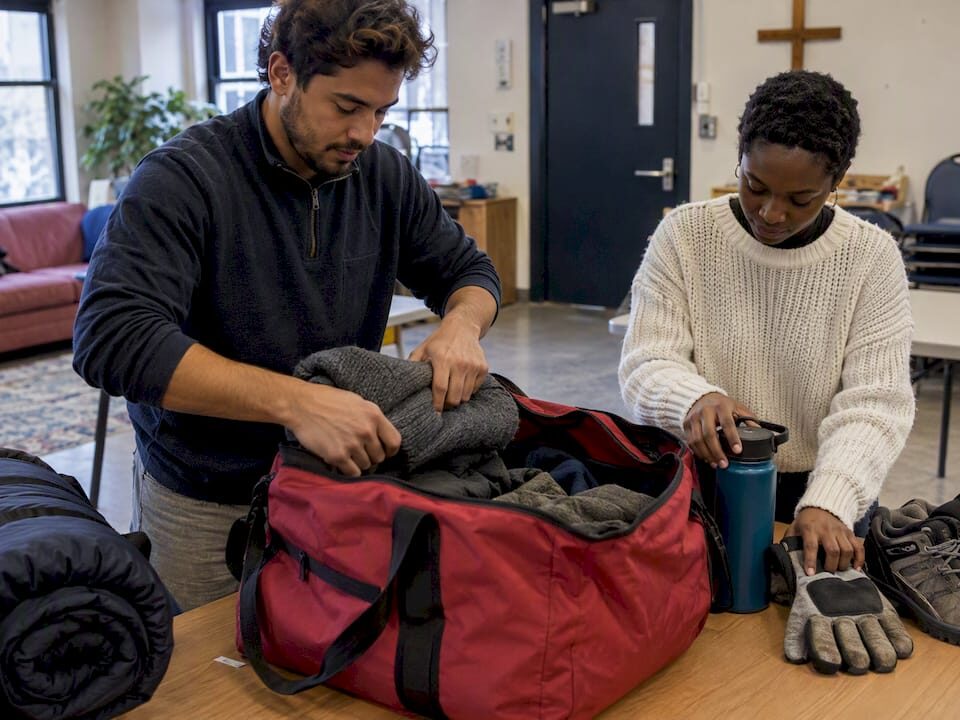
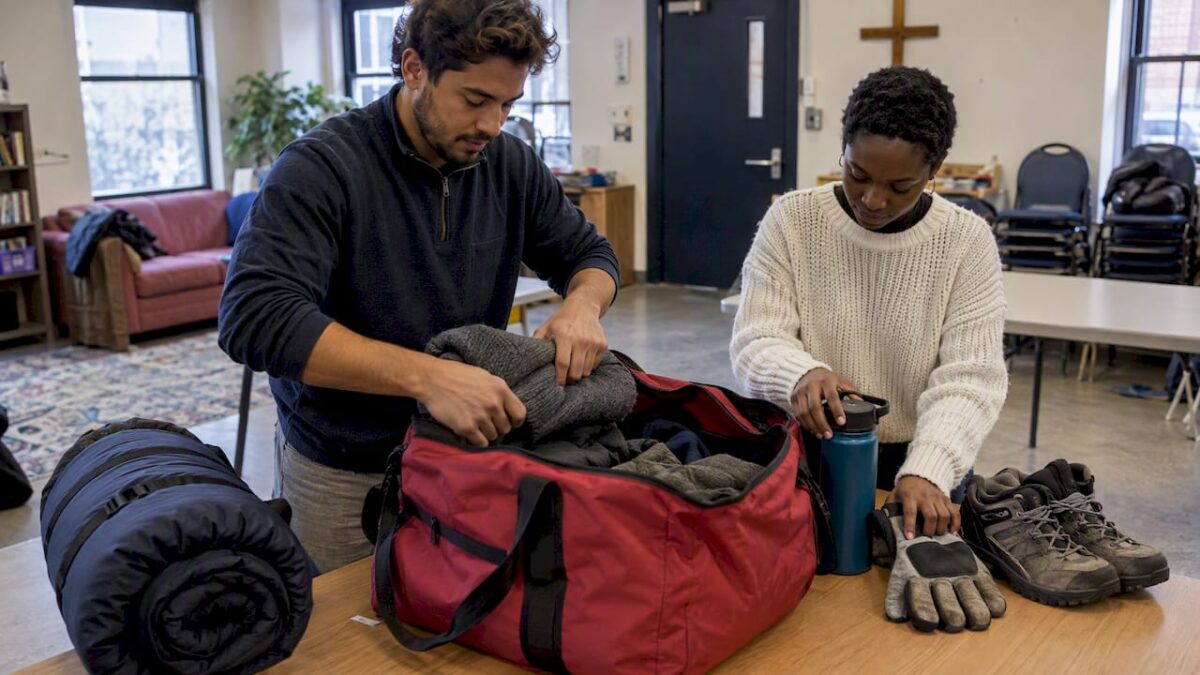
Outreach is the meal handed to someone who is hungry, the coat given to someone who is cold, the ride offered to someone stuck without transportation. Evangelism is the conversation that follows, the moment someone explains why they showed up at all. The Orthodox Presbyterian Church draws this line clearly: outreach meets material needs and can build the trust that makes people receptive to the gospel, but it does not substitute for actually telling them about Christ.
That distinction shows up in the Greek text itself. The word for evangelize, euangelizō, appears 125 times in the New Testament, while kērussō, meaning to proclaim, appears 59 times, both carrying the sense of speech, not just service.
Outreach Magazine makes a similar case: social action alone, however generous, is not identical to evangelism. Both matter. Confusing them tends to leave churches doing good work while never actually explaining why they’re doing it.
Two passages anchor almost every outreach ministry’s mission statement. In Matthew 28:19–20, Jesus commands his followers to “go and make disciples of all nations,” baptizing and teaching them. Mark 16:15 echoes it more simply: “Go into all the world and preach the gospel to every creature.” Together, these verses form what most Christians call the Great Commission, and The Bible Seminary treats them as the scriptural foundation for mission work broadly, not just formal missionary trips overseas.
The book of Acts shows this command playing out differently depending on the audience. Paul reasons with philosophers in Athens one way and preaches to Jewish synagogues another. That flexibility is instructive:
Luke 5:32 adds another layer, recording Jesus saying he came “to call sinners to repentance,” which is the invitation outreach is ultimately meant to lead toward.
Most outreach ministries fall into a handful of recognizable categories, and knowing what each one actually looks like helps you figure out where you fit.
A few things stay consistent across all five:
Getting from curiosity to actual participation usually takes fewer steps than people expect.
Pro Tip: Don’t launch a weekly program on your first attempt. Run one event, fix what broke, then commit to a schedule. Ministries that skip the pilot stage burn out volunteers fast when the logistics they didn’t anticipate finally catch up with them.
Partnering with an established network also shortens your learning curve considerably. Tools built for personal witness, like the resources at Promote the Truth, can support the evangelism side once your outreach opens the door.
The biggest failure point in outreach ministry isn’t lack of heart. It’s lack of a repeatable system. A single food giveaway feels good and helps real people, but ministries that build a sequence, first contact, a return visit, an invitation to a small group, a discipleship relationship, see far more lasting change than those that run one-off events indefinitely.
A working volunteer training checklist typically covers:
Documenting this in a written outreach manual, covering supply storage, transport, site setup, and budget lines, prevents the kind of avoidable failures that come from assuming someone else remembered the folding tables.
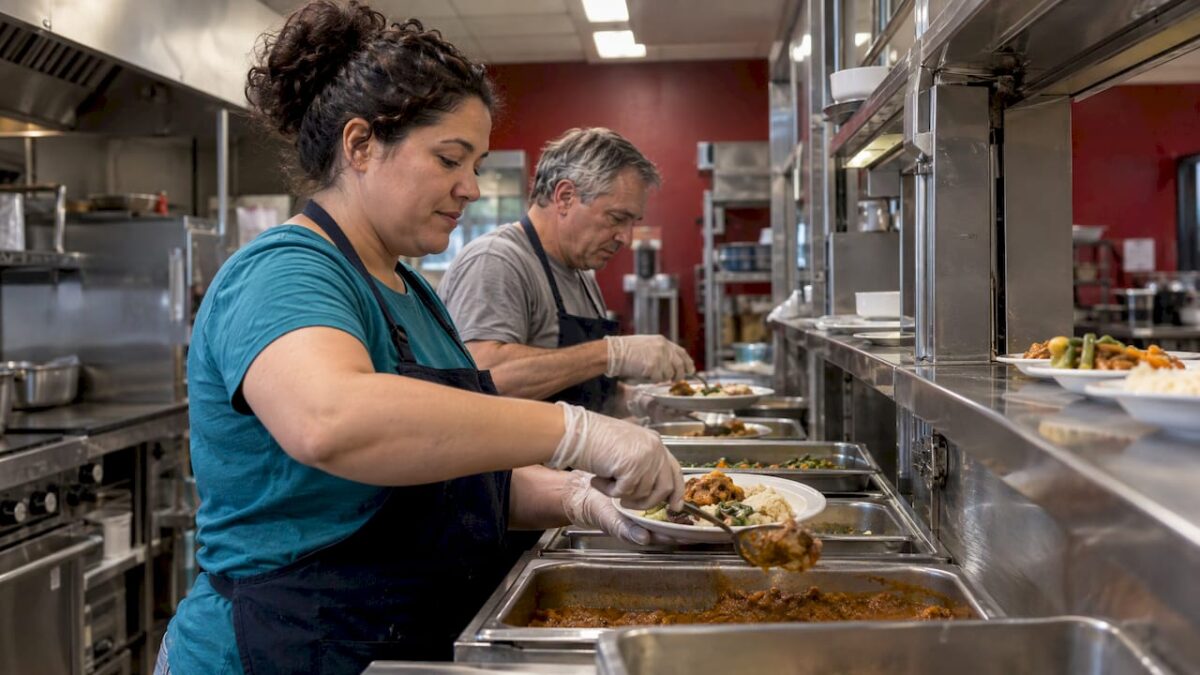
NYSUM trains more than 5,000 people annually and has served over 16,500 meals through its outreach initiatives, numbers that reflect what happens when training and repeatable logistics back up genuine compassion.
That scale didn’t happen by accident. It happened because the operational structure behind each trip was built before the first team ever arrived.
You don’t need elaborate reporting software to know whether your outreach is working. Track people served per event, how many return, and how long volunteers stay committed before burning out. If your ministry includes evangelism components, log follow-up conversations and any decisions or baptisms that result.
Low-cost collection methods work fine for most churches:
NYSUM’s leader survey data shows how useful this kind of feedback loop is for improving future trips. Report these numbers plainly to donors and church leadership: raw counts, trends over time, and a short story or two. Stakeholders trust specificity far more than vague claims of “impact.”
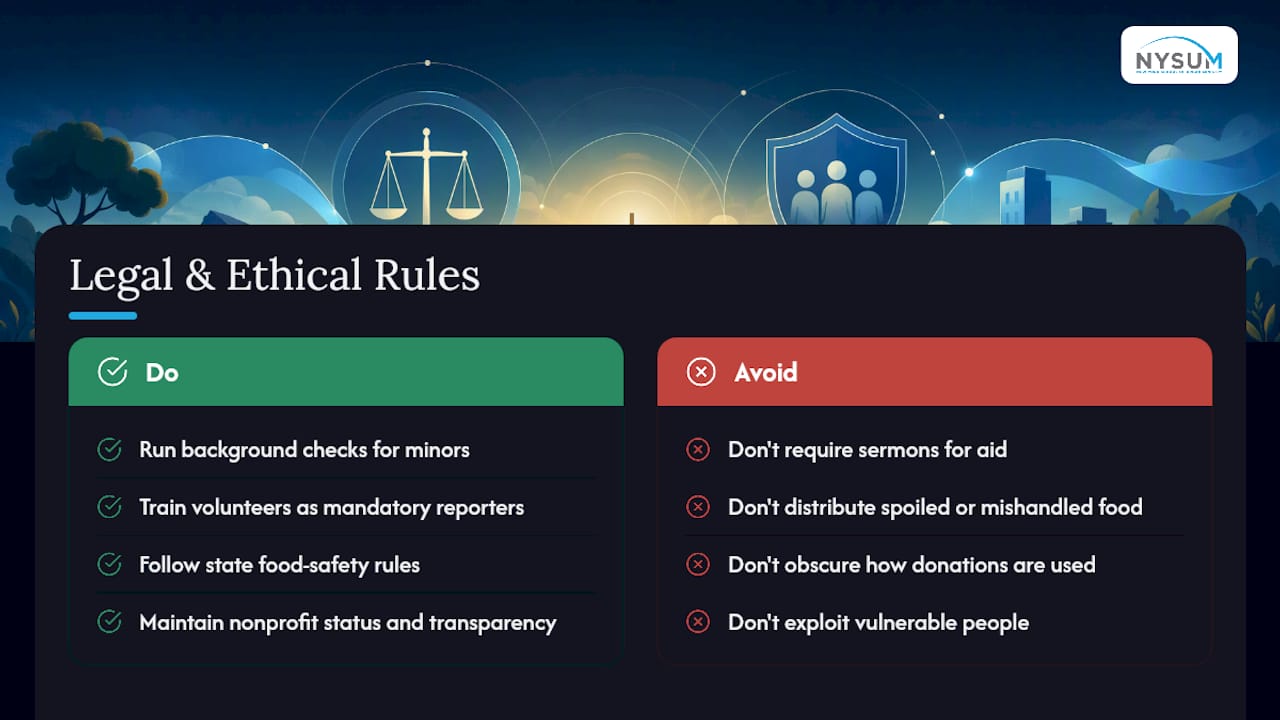
Outreach work touches vulnerable populations, which means legal exposure and ethical responsibility both go up. Any program involving minors needs background checks and, in most states, mandatory reporter training for volunteers who might encounter signs of abuse or neglect.
Food distribution carries its own rules. Most states offer some liability protection for good-faith food donation under variations of the federal Bill Emerson Good Samaritan Act, but that protection typically requires basic food safety handling, not a free pass on spoiled or mishandled items. If your ministry serves meals regularly, someone on your team should know your state’s specific food handler requirements.
Financial ethics matter just as much as legal compliance. Donors deserve to know whether their gift goes to a designated project or the general fund, and a ministry accepting tax-deductible donations needs proper nonprofit status and basic financial transparency, ideally an annual report or accessible giving statement.
Ethically, outreach also carries a responsibility not to exploit vulnerability. Requiring someone to sit through a sermon before receiving food, sometimes called “conversion conditioning,” draws real criticism even from within Christian circles, because it turns compassion into a transaction. Good outreach offers help without preconditions and lets the gospel conversation happen honestly, invited rather than imposed.
Cultural sensitivity fits under this same umbrella. Serving a neighborhood well means understanding its language, its dominant faith backgrounds, and its historical relationship with outside groups showing up to “help,” so outreach lands as respect rather than assumption.
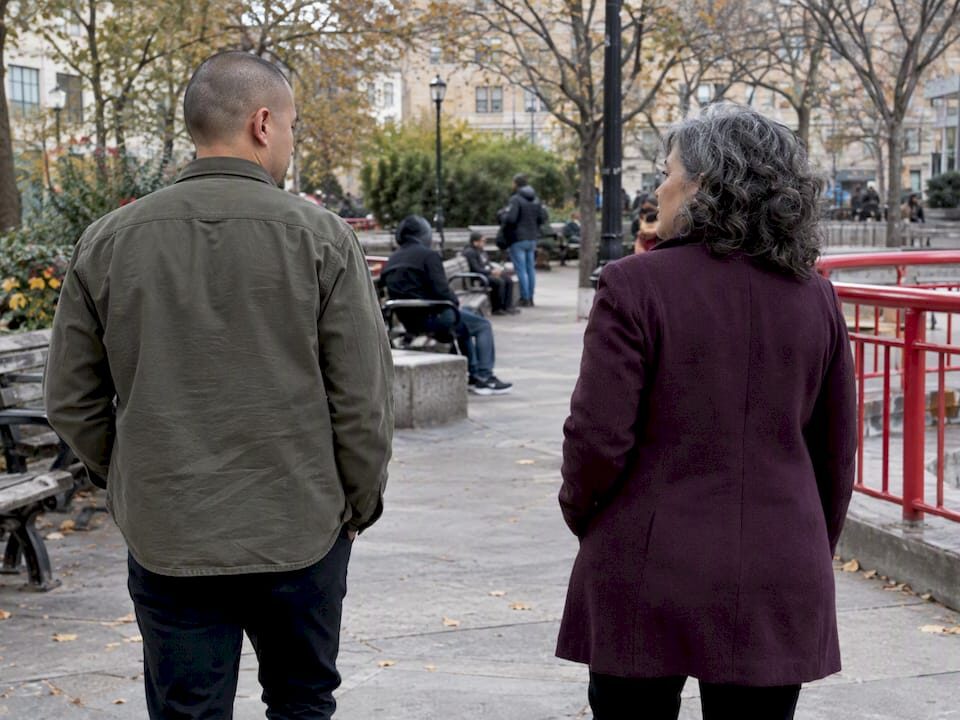
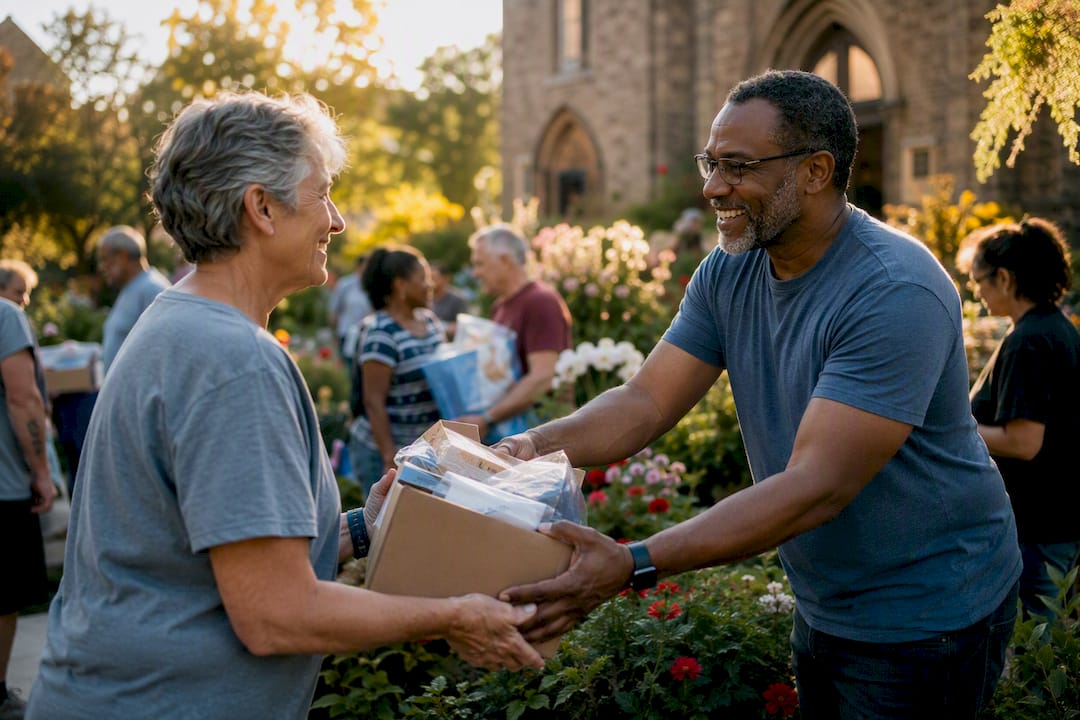
No outreach ministry, however well-funded, can serve a whole community alone. Local churches already have relationships, physical space, and institutional trust that outside groups take years to build. Partnering with them multiplies impact instead of duplicating it.
Community organizations bring a different asset: infrastructure. A local food bank already has cold storage and supply chains. A city homeless shelter already has case management relationships. A Christian outreach program that partners with these groups rather than competing against them reaches more people with less waste.
This kind of collaboration also protects against a common outreach mistake: showing up in a neighborhood once, generating goodwill, and then vanishing. Churches that stay because they live there provide the continuity a short-term visiting team cannot. This is exactly why structured mission trip organizations increasingly build partnerships with local churches into their model rather than parachuting teams in cold. NYSUM’s approach across New York City’s five boroughs works specifically because visiting teams serve alongside congregations that already know the block, the families, and the specific needs.
Practical collaboration looks like shared calendars so events don’t overlap and compete for the same volunteers, joint training sessions so visiting teams and local leaders operate from the same playbook, and honest conversations about what the community actually needs versus what an outside group assumes it needs. The latter matters more than most first-time outreach leaders expect.
Volunteer burnout tops the list. Enthusiasm runs high for the first few events, then attendance quietly drops once the initial excitement fades and the routine logistics work sets in. The fix isn’t more recruitment, it’s better rotation: build a large enough volunteer base that no single person carries a program alone every week.
Funding instability comes second. Outreach programs that depend on a single annual fundraiser tend to feel each year’s uncertainty acutely. Diversifying toward recurring small donors, in-kind partnerships with local businesses, and designated giving funds smooths this out considerably.
A third challenge is harder to name but just as common: confusing activity with impact. A ministry can run events every week for years without asking whether anyone’s life actually changed. This is where the earlier point about measurement matters most. Without tracking repeat engagement or spiritual outcomes, a program can feel successful while quietly stagnating.
Cultural missteps also derail well-intentioned outreach. A team that shows up with assumptions about what a neighborhood needs, rather than asking, risks doing more harm than good, however good their intentions. Building relationships with local church leaders before launching anything new solves most of this before it starts.
Finally, theological drift is a quiet risk. Programs that grow fast on the service side sometimes lose the proclamation side entirely, becoming indistinguishable from secular charity. Regularly revisiting your ministry’s stated purpose, and training volunteers to talk about faith comfortably, keeps that balance intact.
Most guidance on outreach spends its energy on motivation, encouraging churches to simply care more, pray harder, or feel a stronger calling. That’s not wrong, but it undersells the actual bottleneck. The ministries that sustain outreach for years, not just months, are the ones that treat logistics as seriously as they treat theology.
The conventional wisdom says passion drives outreach. The evidence points somewhere more specific: passion gets a program started, but a documented playbook, volunteer rotation, and honest measurement are what keep it alive. A church that skips the operational groundwork and leans entirely on enthusiasm will burn out its best volunteers within a year.
If there’s one priority for a reader just starting out, it’s this: don’t wait for the perfect program idea. Run a small pilot, document what worked and what didn’t, and build your training checklist from that real experience rather than a theoretical one. The theology tells you why to go. The operations determine whether you last long enough to matter.
— NYSUM
If the biggest gap in most outreach efforts is operational, not spiritual, the fastest fix is training built by people who run this work every week. NYSUM gives church groups, youth organizations, and individual volunteers hands-on preparation for urban ministry across New York City’s five boroughs, combining food outreach, street evangelism, and compassion projects with the logistics training that keeps a program running past its first pilot event.
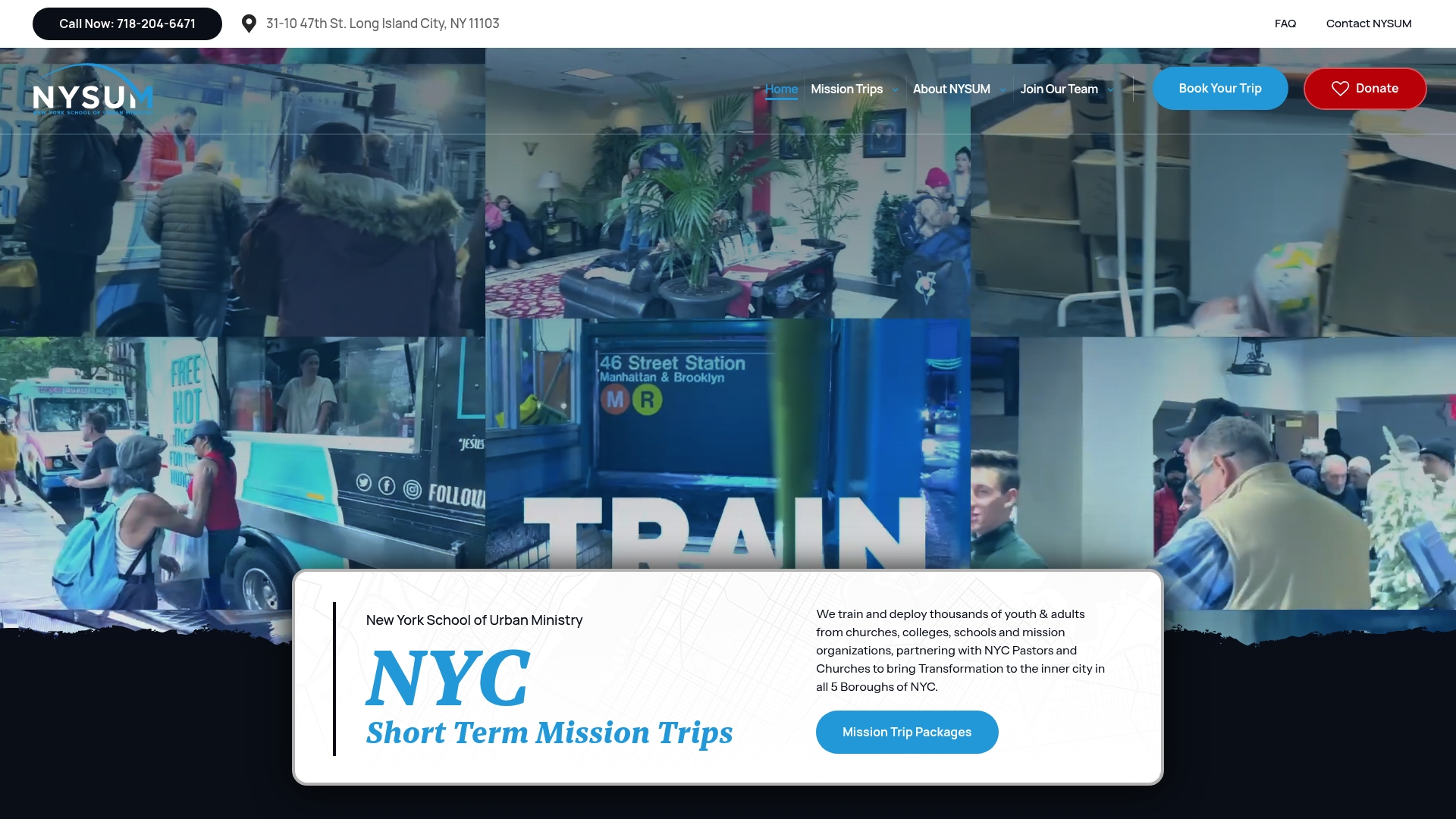
Whether you’re bringing a full team or coming as an individual ready to learn, NYSUM’s mission trip packages pair immersive service with structured training in volunteer safety, testimony practice, and follow-up strategy, the same practices behind its 5,000-plus annual trainees and 16,500-plus meals served. Groups can also book time at the training campus for a dedicated on-site experience. If you’re ready to move from reading about outreach to actually doing it, check available dates for an upcoming mission trip and reserve your team’s spot.
For scriptural grounding, see Matthew 28:19. For operational steps, review NYSUM’s training campus.
Christian outreach is organized service, meeting needs like hunger, homelessness, or isolation, carried out by believers or a church, often creating natural openings for the gospel to be shared.
Scripture commands both compassionate service and verbal proclamation, most directly in the Great Commission passages of Matthew 28:19–20 and Mark 16:15.
It’s a structured ministry effort, a food pantry, mission trip, youth program, or homeless services initiative, designed to meet practical needs while connecting people to a local church community. Programs like NYSUM’s mission trips combine several of these formats into one training experience.
Outreach is action, feeding, clothing, sheltering. Evangelism is verbal proclamation of the gospel and an invitation to respond; outreach often opens the door evangelism walks through.
Contact a local church’s ministry page or a training organization like NYSUM, complete any required background check and orientation, and start with a single event before committing to a recurring schedule.
Tel: 718.204.6471 | Email: info@nysum.org
This website uses cookies
We use cookies to personalise content and ads, to provide social media features and to analyse our traffic. We also share information about your use of our site with our social media, advertising and analytics partners who may combine it with other information that you’ve provided to them or that they’ve collected from your use of their services.
Cookies are small text files that can be used by websites to make a user's experience more efficient.
The law states that we can store cookies on your device if they are strictly necessary for the operation of this site. For all other types of cookies we need your permission. This means that cookies which are categorized as necessary, are processed based on GDPR Art. 6 (1) (f). All other cookies, meaning those from the categories preferences and marketing, are processed based on GDPR Art. 6 (1) (a) GDPR.
This site uses different types of cookies. Some cookies are placed by third party services that appear on our pages.
You can at any time change or withdraw your consent from the Cookie Declaration on our website.
Learn more about who we are, how you can contact us and how we process personal data in our Privacy Policy.
Please state your consent ID and date when you contact us regarding your consent.