November 5, 2026

A practical guide to domestic mission trips for churches, youth and college groups: what the work looks like, how to prepare safely, and what NYC trips cost.

We also accept other Non-Traditional Gifts.
Click here to learn more
We also accept other Non-Traditional Gifts.
Click here to learn more
We also accept other Non-Traditional Gifts.
Click here to learn more
We also accept other Non-Traditional Gifts.
Click here to learn more
We also accept other Non-Traditional Gifts. Click here to learn more
We also accept other Non-Traditional Gifts. Click here to learn more

Start Trauma Informed Ministry This Quarter: SAMHSA’s Six Principles
September 21, 2026
Care Bag List: Five Essentials and Safety for Church and Campus Leaders
September 28, 2026New York School of Urban Ministry
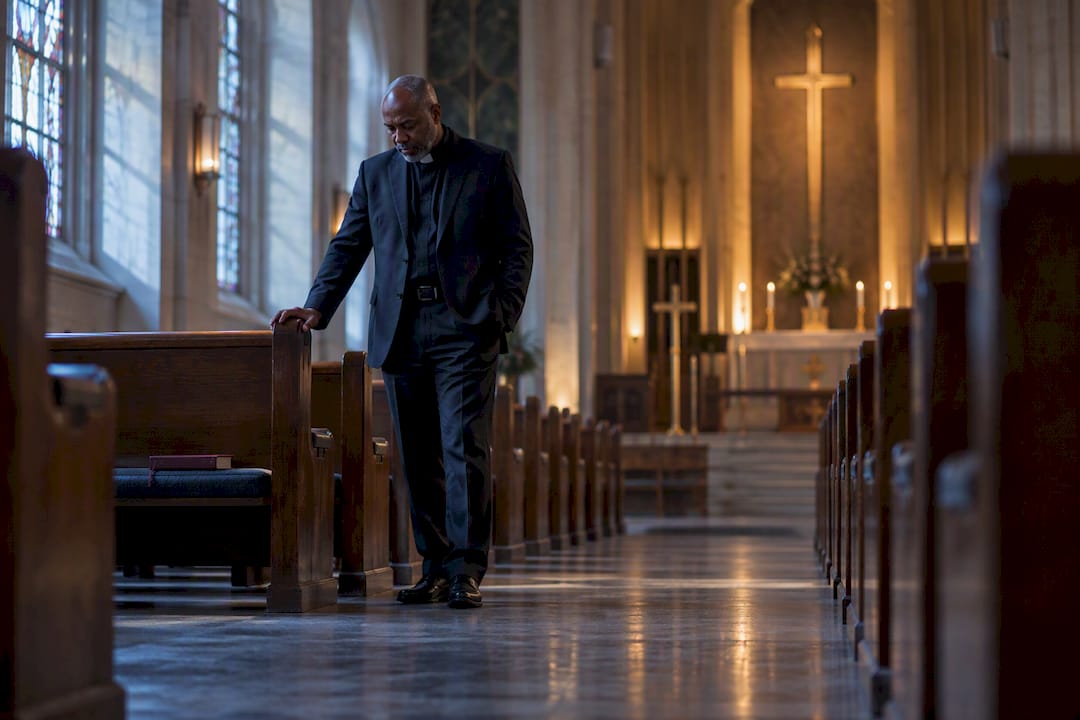
Compassion fatigue in ministry is the combination of burnout and secondary traumatic stress that develops after sustained exposure to other people’s pain, according to the Substance Abuse and Mental Health Services Administration (SAMHSA). If you recognize the pattern in yourself right now, the first move is not a retreat or a resignation letter. Pause, write down what you are noticing, and hand off one immediate duty to someone else on your team while you assess what comes next.
TL;DR:
- Pastors and ministry leaders are at higher risk of compassion fatigue due to repeated exposure to intense trauma and unresolved personal trauma.
- Building structured debriefs, clear boundaries, and weekly rituals can significantly reduce emotional overload and foster resilience in ministry work.
- Organizational support, including role rotation, formal referral pathways, and trauma-informed practices, is essential to prevent burnout and secondary traumatic stress.
- Symptoms persisting beyond two weeks or involving severe depersonalization require immediate professional intervention to avoid deepening mental health issues.
- Team-based outreach with shared responsibilities and supervision, exemplified by NYSUM’s model, helps prevent compassion fatigue and promotes sustainable ministry.
Compassion fatigue and burnout feel similar from the inside, but they come from different sources and require different fixes. Burnout is a slow burn caused by chronic workload and organizational strain. It shows up as exhaustion, cynicism, and a creeping sense that nothing you do matters. Compassion fatigue adds a second layer on top of that: secondary traumatic stress, which is what happens when you absorb the trauma of the people you counsel, visit, and pray over week after week.
That second layer produces a distinct set of symptoms. SAMHSA’s self-care resources for crisis counselors describe helplessness, disorientation, irritability, sleep disturbances, and somatic complaints as common markers. In a ministry setting, that often looks like:
Workforce wellness research on crisis workers found that roughly 30% may develop conditions like depression or PTSD, compared with about 20% in the general population. Pastors, chaplains, and ministry counselors sit squarely inside that higher-risk category because the job requires repeated, close contact with other people’s worst days.
Ministry has a built-in exposure problem. You are present at deathbeds, in the middle of marital collapse, at the scene of overdose and addiction crisis, and in rooms where abuse gets disclosed for the first time. Each of those moments asks something of you emotionally, and most pastors walk into the next one before fully processing the last.
Several factors compound that baseline exposure:
That last point matters more than it might seem. Pastors are regularly asked to do triage work that trained clinicians spend years learning, often with no formal referral pathway and no supervisor checking in afterward.
Prevention starts with treating self-care as a discipline, not an indulgence. SAMHSA’s guidance names four resilience components worth building into a weekly rhythm: sleep, nutrition, physical activity, and relaxation. None of these are dramatic. All of them get skipped first when a week gets hard, which is exactly why they need to be scheduled rather than left to whatever time is left over.
Pro Tip: Block your resilience components on your calendar the same way you block sermon prep. If sleep and exercise are not appointments, they will lose to the next emergency every time.
Boundaries are the second pillar, and they require language ready before you need it. A scripted response like “I want to be present for this. Let me check my week and get back to you by tomorrow” buys time without saying no outright. Set actual office hours and communicate them clearly, so congregants know when you are reachable and when you are not. Delegate visitation and counseling load to elders, deacons, or trained lay leaders instead of routing every crisis through one person.
Scripture backs this up directly. Moses nearly collapsed under the weight of judging every dispute alone until Jethro told him to delegate authority to capable leaders (Exodus 18; Numbers 11). Jesus himself withdrew from crowds repeatedly to pray and rest, modeling that retreat is not abdication. Paul’s letters to Timothy reflect the same value, urging mutual support rather than solitary endurance.
Here is a practical weekly and monthly framework:
Wesleyan Church pastoral wellness guidance points to guilt as the single biggest barrier keeping pastors from resting. Reframing rest as stewardship, rather than as a failure of dedication, is often the mental shift that makes the rest of this list possible.
Individual self-care only goes so far if the system around a pastor keeps generating the same overload. Churches need structures that spread the weight of pastoral care rather than concentrating it in one person.
The CDC’s 2026 findings reinforce why this matters at the organizational level: faith leaders themselves are asking for training and partnerships with mental health professionals, not just more encouragement to “take care of yourself.”
SAMHSA’s tip sheet for disaster responders gives a clear threshold: if symptoms persist or worsen for more than two weeks, or if they interfere with your ability to function at home or in ministry, it is time to bring in outside support. That threshold applies whether the symptom is sleeplessness, irritability with your family, or a growing dread of your own office.
Some signs require immediate action rather than a two-week waiting period. Suicidal thoughts, severe depersonalization, or a sense of being unable to keep anyone safe, including yourself, mean you contact a crisis line or licensed professional the same day.
Practical next steps once you hit that threshold:
Some of the best prevention work happens by design, before a crisis, through how outreach itself gets structured. NYSUM builds its urban ministry training around shared responsibility rather than solo heroics, which is exactly what the research above recommends.
This structure aligns closely with SAMHSA’s Six Principles and produces something worth naming directly: compassion satisfaction. Shared ministry work, done alongside a trained team, tends to build resilience rather than deplete it, which is part of why churches exploring mission trip planning increasingly look for programs built around team structure rather than individual endurance.
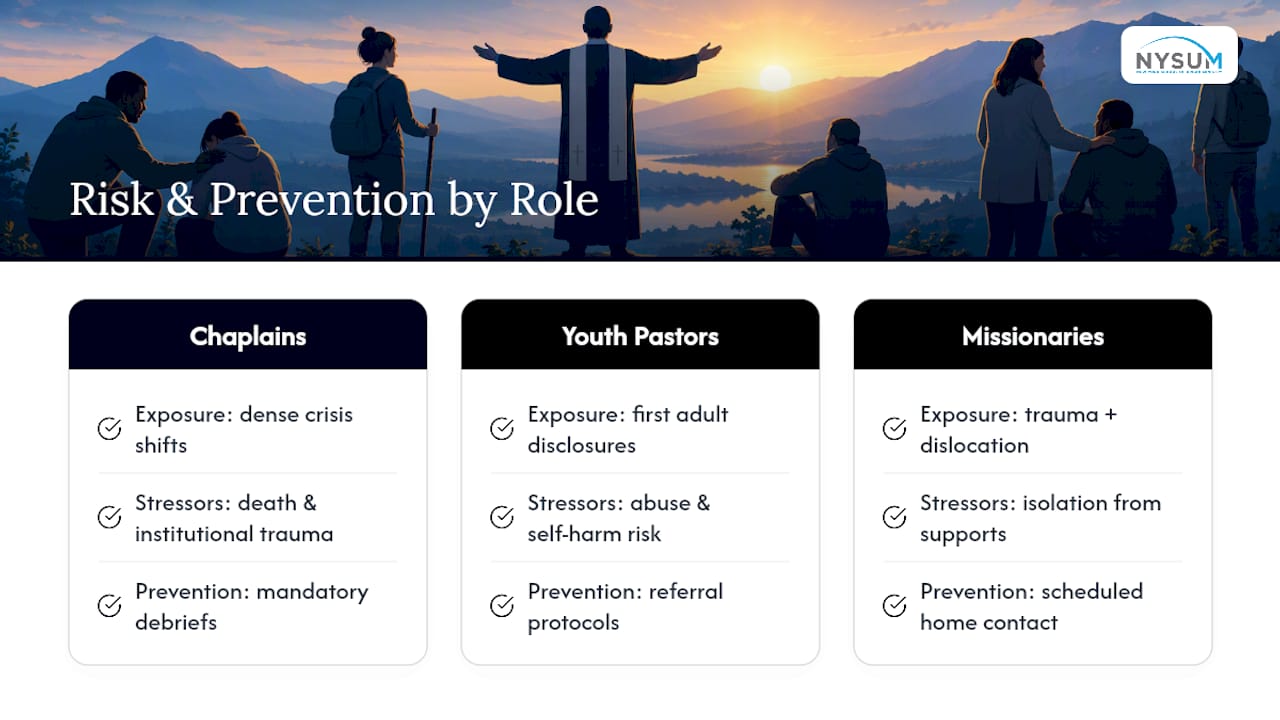
Compassion fatigue does not look identical across every ministry role. The exposure pattern, and therefore the prevention strategy, shifts depending on what kind of care you are giving.
Chaplains working in hospitals, hospices, or prisons face concentrated, repeated exposure to death, grief, and institutional trauma, often with less control over their schedule than a congregational pastor. Their risk builds through sheer density of crisis encounters in a single shift, which makes structured debriefing after each shift especially critical rather than optional.
Youth pastors carry a different weight: they are frequently the first adult a teenager discloses abuse, self-harm, or suicidal thoughts to, often with far less clinical training than the situation demands. The emotional toll compounds because youth ministry also asks for high energy and constant availability at retreats, camps, and late-night crisis calls, leaving little recovery time between demands.
Missionaries and short-term outreach leaders face a third pattern: cultural dislocation stacked on top of trauma exposure, frequently far from their normal support network of family, friends, and home church community. Isolation, which is already a risk factor for compassion fatigue generally, becomes the default condition rather than an occasional lapse.
Each role needs a tailored response. Chaplains benefit most from mandatory post-shift debriefs. Youth pastors need clear referral protocols to hand off disclosures they are not equipped to counsel alone. Missionaries need scheduled contact with home support systems and, ideally, team-based deployment rather than solo placement.
Left alone, compassion fatigue rarely plateaus. It tends to deepen, and the consequences extend well beyond the individual pastor.
On a personal level, untreated compassion fatigue can progress toward clinical depression, anxiety disorders, or symptoms consistent with PTSD, the same conditions the workforce wellness data flagged at elevated rates among crisis workers. Marriages and family relationships absorb the fallout when irritability, emotional withdrawal, and exhaustion come home from the office every night.
The ministry itself suffers too. Cynicism erodes the empathy that made someone effective in pastoral care in the first place, and congregants can sense the difference between a pastor who is present and one who is going through the motions. Decision-making quality drops. Sermons feel flatter. Counseling sessions become shorter and less attentive, sometimes without the pastor even noticing the shift.
At the extreme end, unaddressed compassion fatigue is one of the most common paths to full ministry burnout and eventual resignation. Churches lose leaders they invested years in developing, congregations lose pastoral continuity during exactly the seasons they need it most, and the departing pastor often carries unresolved shame about “not being strong enough” to finish well. None of that outcome is inevitable. It is also entirely avoidable with the boundaries, supervision, and organizational supports outlined earlier in this guide.
Awareness training works best when it happens before a crisis, not during one. Denominational conferences, seminary continuing education, and staff retreats are natural entry points for teaching pastors what compassion fatigue looks like and how it differs from ordinary tiredness.
The CDC’s 2026 research on faith leaders found real appetite for this kind of training, particularly around active listening skills and referral pathways to mental health professionals. That interest is worth acting on directly. Practical steps include:
Training pays off fastest when leadership models it visibly. A senior pastor who openly schedules maintenance therapy or takes a real Sabbath sends a stronger signal to staff and volunteers than any policy document could.
Spiritual practices are not a substitute for therapy or organizational reform, but they play a distinct, complementary role in guarding against compassion fatigue. The goal is intentional practice, not another item added to an already full schedule.
Contemplative prayer, practiced for even ten minutes before or after a difficult pastoral visit, creates a deliberate pause between exposure and the next task. That pause mirrors the micro-ritual closure practice mentioned earlier, giving your mind a clear boundary between what you just witnessed and what comes next. Lectio Divina, slow reading of a short passage rather than sermon-prep reading, offers a similar function: it is Scripture engaged for your own soul rather than for someone else’s benefit.
Silence and solitude, following Jesus’s own pattern of withdrawing from crowds, counter the hypervigilance that secondary traumatic stress produces. Even a short walk without a phone can interrupt the mental loop of replaying a hard conversation.
Confession and spiritual direction address something self-care checklists often miss: the moral and spiritual weight of carrying other people’s pain. A trusted spiritual director or covenant group gives a pastor somewhere to name that weight honestly, outside the congregation, before it turns into cynicism or numbness. None of these practices replace professional treatment when symptoms cross the two-week threshold. They work best as daily and weekly rhythms that keep that threshold from being crossed in the first place.
I have watched too many capable leaders treat exhaustion as proof of faithfulness. It isn’t. The pastors who last longest are not the ones who never get tired. They are the ones who build a rhythm of rest and accountability before they need it, and who are honest the moment they notice the warning signs in themselves.
If you recognize even two or three of the signs described here, commit to one concrete change this week. Book a team training, start a weekly supervision check-in with another leader, or schedule a first appointment with a counselor before a crisis forces your hand.
Pro Tip: Set up maintenance therapy or a mentor relationship now, while things are stable. Starting before a crisis removes the shame that often keeps pastors from reaching out once they’re already struggling.
If your church wants a structured way to practice shared, supervised ministry rather than solo endurance, NYSUM’s trauma-informed ministry training is worth a look.
— Pastor Peter M. DeArruda NYSUM President
Most pastors don’t burn out from one hard week. They burn out from years of carrying outreach and pastoral care solo, with no team structure absorbing any of the weight. NYSUM’s mission trip model was built around the opposite approach: trained teams, supervised roles, and structured debriefs, so no single leader shoulders an entire outreach experience alone.

If you lead a church, youth group, or college ministry in Texas, Georgia, Ohio, or anywhere across the country, a mission trip to New York City can offer your team a hands-on outreach experience, typically including pre-trip training and on-site pastoral support. Options range from the single-day Discover NYSUM experience to a full 5 Day Trip, with weekend and 3-day packages in between. Groups exploring seasonal outreach can also look at packages like Christmas Compassion, built around the same shared-team model.
Bringing a team means your pastor gets to lead alongside trained volunteers instead of carrying the emotional weight of outreach solo. Explore reservations and available dates to find a package that fits your group’s size and calendar.
Definitions vary across sources, but most describe a progression from early warning signs, like irritability and fatigue, through emotional numbness and cynicism, and finally to full burnout or secondary traumatic stress if left unaddressed. SAMHSA’s guidance frames it less as fixed stages and more as a combination of burnout and secondary traumatic stress that builds over repeated exposure.
It often shows up as a pastor who feels numb during hospital visits, dreads counseling appointments they once welcomed, or grows cynical about congregants’ struggles despite genuinely caring about their calling. The CDC’s 2026 research found many faith leaders feel undertrained to handle these crises, which compounds the strain.
Burnout is chronic exhaustion and reduced sense of effectiveness from ongoing workload, while compassion fatigue adds secondary traumatic stress from absorbing other people’s pain and crises directly. A pastor can experience burnout without compassion fatigue, but the two often overlap in high-exposure roles like chaplaincy and youth ministry.
SAMHSA recommends seeking help if symptoms persist or worsen for more than two weeks or begin interfering with daily functioning. Suicidal thoughts or severe depersonalization warrant contacting a crisis line or licensed professional immediately, not after a waiting period.
Structured, team-based outreach spreads emotional exposure across a group instead of concentrating it in one leader, which supports the peer-support and debriefing practices SAMHSA recommends. NYSUM’s ministry training builds supervised team roles and debriefs into every trip for exactly this reason.
Tel: 718.204.6471 | Email: info@nysum.org
This website uses cookies
We use cookies to personalise content and ads, to provide social media features and to analyse our traffic. We also share information about your use of our site with our social media, advertising and analytics partners who may combine it with other information that you’ve provided to them or that they’ve collected from your use of their services.
Cookies are small text files that can be used by websites to make a user's experience more efficient.
The law states that we can store cookies on your device if they are strictly necessary for the operation of this site. For all other types of cookies we need your permission. This means that cookies which are categorized as necessary, are processed based on GDPR Art. 6 (1) (f). All other cookies, meaning those from the categories preferences and marketing, are processed based on GDPR Art. 6 (1) (a) GDPR.
This site uses different types of cookies. Some cookies are placed by third party services that appear on our pages.
You can at any time change or withdraw your consent from the Cookie Declaration on our website.
Learn more about who we are, how you can contact us and how we process personal data in our Privacy Policy.
Please state your consent ID and date when you contact us regarding your consent.